Yi Jiang

I am an undergraduate student at the Global Institute of Future Technology, Shanghai Jiao Tong University (class of 2024), majoring in Sustainable Energy with a minor in Artificial Intelligence.
My research sits at the intersection of machine learning and the physical sciences — AI for Science. I am particularly interested in geometric deep learning for accelerating molecular design and discovery, in building and training foundation models for science, and in self-driving laboratories and scientific agents that can close the loop between hypothesis and experiment.
I spent an exchange term at Nanyang Technological University, Singapore, where I studied data science and artificial intelligence.
Outside of work, I enjoy piano, guitar, singing, photography, and table tennis.
Feel free to reach out — I am always happy to chat! 👋
我是上海交通大学 溥渊未来技术学院 2024 级的本科生,主修可持续能源,辅修人工智能。
我的研究兴趣集中在机器学习与物质科学的交叉领域,即科学智能(AI for Science)。具体而言,我关注用几何深度学习加速分子设计与发现、科学基座大模型的开发与训练,以及能够打通“假设—实验”闭环的自驱动实验室与科学智能体。
我曾赴新加坡南洋理工大学交换学习,主修数据科学与人工智能方向课程。
工作之余,我爱好钢琴、吉他、唱歌、摄影和乒乓球。
欢迎随时联系我,我很乐意与人交流!👋
News近期动态
| Sep 25, 20262026年9月25日 | Awarded the National Scholarship of China.获得国家奖学金。 |
|---|---|
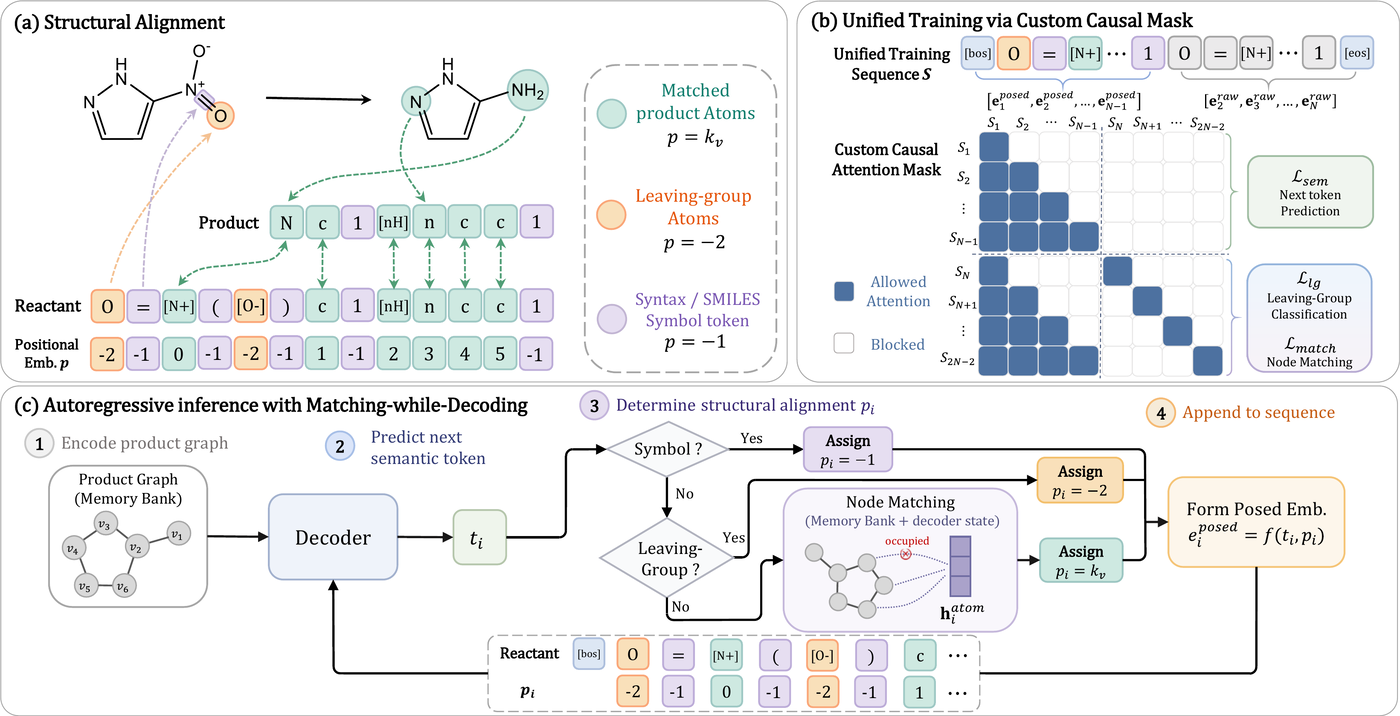
| Sep 25, 20262026年9月25日 | Our paper Matching-while-Decoding: Enhancing Template-Free Retrosynthesis via Explicit Structural Alignment was accepted to NeurIPS 2026.论文 Matching-while-Decoding: Enhancing Template-Free Retrosynthesis via Explicit Structural Alignment 被 NeurIPS 2026 接收。 |
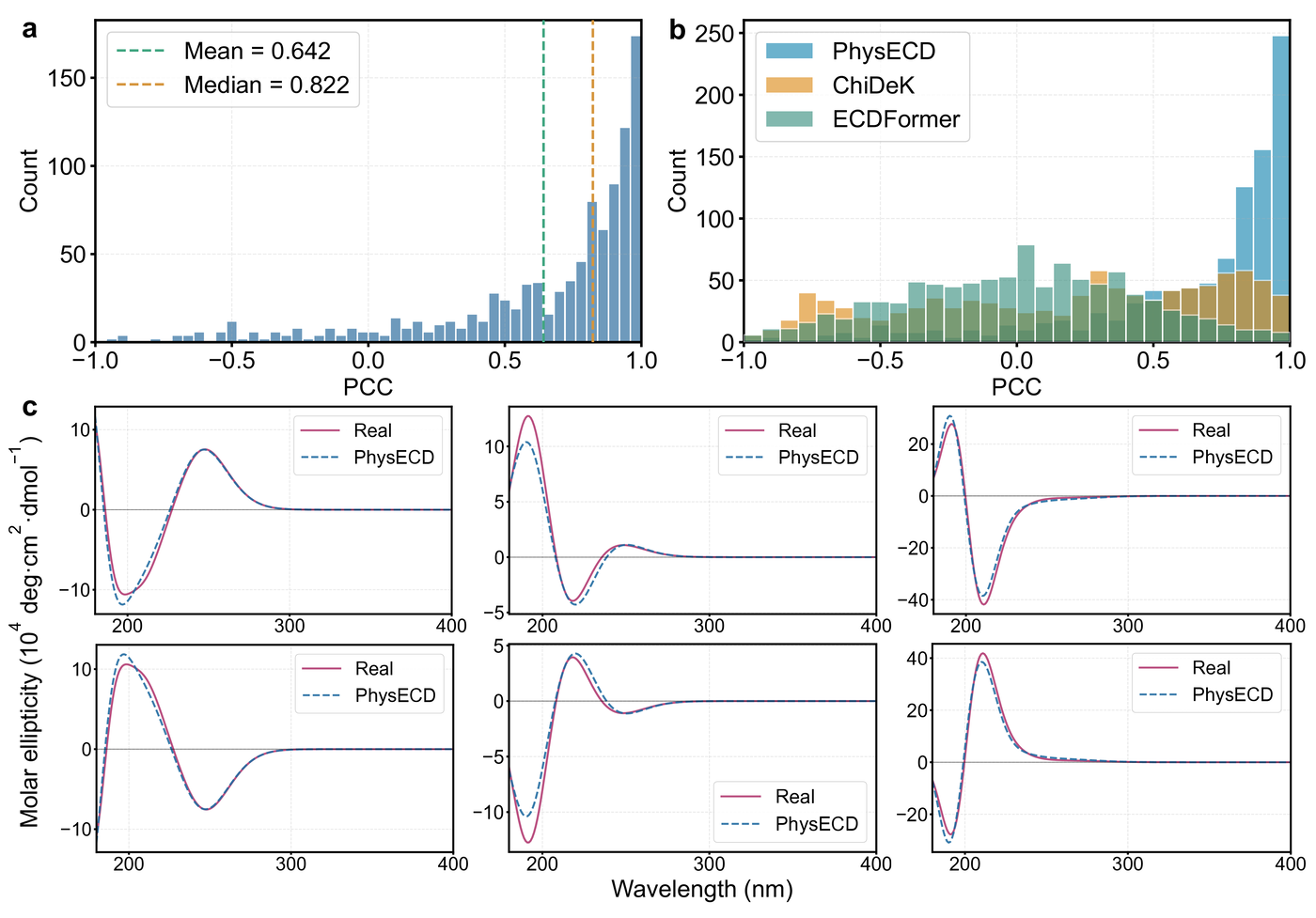
| Aug 22, 20262026年8月22日 | My first first-author paper, PhysECD, is on arXiv — a physics-constrained E(3)-equivariant framework for predicting electronic circular dichroism spectra.首篇第一作者论文 PhysECD 上线 arXiv —— 一个用于预测电子圆二色光谱的物理约束 E(3) 等变框架。 |
| Aug 05, 20262026年8月5日 | Selected for the Bole Program at Shanghai Jiao Tong University, an honors track for the top 1% of undergraduates.入选上海交通大学伯乐计划(前 1% 本科生荣誉计划)。 |
Selected publications代表性工作
- Matching-while-Decoding: Enhancing Template-Free Retrosynthesis via Explicit Structural AlignmentIn Advances in Neural Information Processing Systems (NeurIPS), 2026